AI Translation for Business: What to Translate, How to Check It, When to Hire a Human
Where AI translation saves small businesses time and money, how to get accurate results, a review process that catches errors, and the documents that still need a professional translator.
On this page
A customer writes in French, a supplier sends a price list in Chinese, and your website only speaks English. A few years ago, handling this meant waiting for a translator or struggling with word-by-word tools. Modern AI translation produces natural, fluent text in seconds, which opens up customers and suppliers that small businesses used to ignore. It also makes mistakes that sound perfectly confident, so knowing where to use it, and how to check it, matters.
Where AI translation works well#
- Customer messages: understanding and answering WhatsApp chats and emails in another language.
- Product descriptions and catalogues for new markets.
- Website pages and FAQs, as a first draft for review.
- Supplier documents: price lists, specifications, shipping emails.
- Internal material: staff instructions, training notes, meeting summaries for a multilingual team.
- Social posts for audiences in different languages.
Where to be careful#
- Legal documents: contracts, terms, official filings. Small wording changes can change obligations.
- Medical and safety information: dosages, warnings, instructions where errors cause harm.
- Marketing slogans: wordplay and cultural references rarely survive translation intact.
- Less widely used languages: quality is typically lower where there's less training text available.
For these, use AI to understand or draft, and a qualified human for the final version.
How to get better results#
Give context#
Tell the tool what the text is and who it's for: "a reply to a customer complaint", "a product page for a shop", "an internal memo". The same sentence can be translated formally or casually depending on context.
Choose the tone#
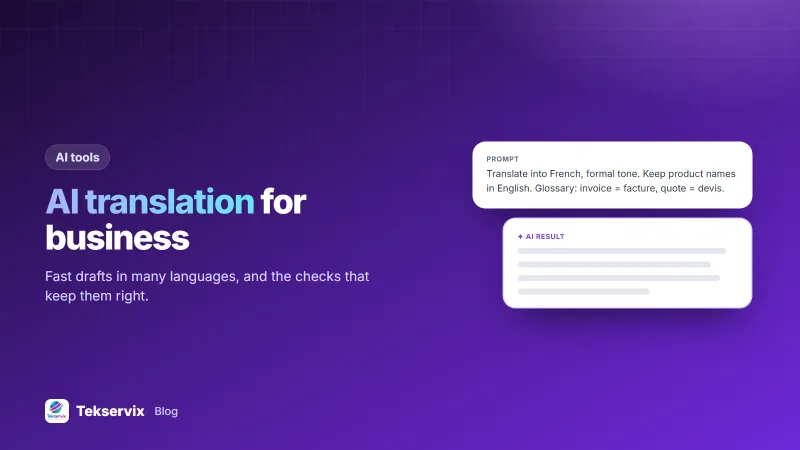
French, Kinyarwanda, German and many other languages distinguish formal and informal "you". Pick deliberately: formal for new customers and official letters, informal for friendly brands and young audiences. The Tekservix AI translator lets you choose neutral, formal or informal tone.
Use a glossary#
List your product names, brand terms and preferred translations: "invoice = facture, quote = devis, keep 'WApenda' in English". Consistency across documents makes you look professional.
Write clear source text#
Short sentences, no slang, no ambiguous abbreviations. "Pls revert ASAP re: PO" translates badly into anything. Clear writing translates well.
Keep formatting#
Good tools preserve line breaks, lists and links, so a translated FAQ or price list stays readable without reformatting.
A simple review process#
- Translate with context, tone and glossary.
- Back-translate key sentences into your language with a separate request. If the meaning changed, rewrite the source more clearly and try again.
- Check the facts: numbers, dates, prices, names and units must match exactly.
- Ask a fluent speaker to read anything customer-facing. A staff member, a partner or a trusted customer often works; they'll spot wording that's correct but unnatural.
- Keep the approved version and reuse it, so you don't retranslate the same text differently next time.
Local languages#
For businesses in East Africa, the real value is often in local languages: Kinyarwanda, Swahili, Luganda and others. Customers respond warmly to messages in their own language, and many are more comfortable reading important information that way. AI support for these languages has improved a lot but remains less consistent than for English or French, so native review matters even more. Our guide to Kinyarwanda translation goes into the specifics.
Translating your website#
A translated website can reach new customers through search, but only if it's done properly:
- Give each language its own URL, such as
/fr/, rather than switching text with a button on the same page. - Translate titles and meta descriptions too, not just the page body.
- Tell search engines about language versions with
hreflangtags; Google explains how in its localized versions guide. - Research keywords in each language. People don't search with translated English phrases; they use their own terms.
Customer support in several languages#
A practical setup for small teams: when a message arrives in a language nobody on the team speaks, translate it to understand it, write the reply in your language, translate the reply, and back-translate once to check the meaning. For common questions, keep approved translated answers ready as quick replies. It won't replace a native speaker for difficult conversations, but it handles most everyday questions well.
Privacy#
Pasting text into any online tool shares it with that service. Avoid putting personal data, passwords, or confidential contract terms into tools you don't trust, and check how the service handles and stores input before translating anything sensitive.
When to hire a translator#
Pay for professional translation when the text is legally binding, when errors could cause harm, when it will be printed or used for years (packaging, signage, brand campaigns), or when the market is important enough that tone must be perfect. Many translators now offer post-editing: they review and correct an AI draft, which is usually faster and cheaper than translating from scratch. For other AI tools that save small teams time, see AI tools for small business.
Machine translation shares the weak spots of other AI writing, so the edits in making AI writing sound human apply to translated drafts too. When you're adapting a sales message rather than translating it word for word, our AI copywriting guide is the better starting point.
Frequently asked questions
Is AI translation accurate enough for business?
For everyday messages, product descriptions and internal documents between widely used languages, it's often very good. Accuracy drops for less common languages, idioms, technical terms and legal wording, so review important text with a fluent speaker.
Can I use AI translation for contracts?
Use it to understand a contract written in another language, but not as the final version you sign or send. Legal texts should be translated or checked by a qualified professional.
How do I keep my brand terms consistent across languages?
Keep a short glossary of product names, brand terms and preferred translations, and include it in your instructions to the tool. Tell it which words should never be translated.

Tekservix Team
The team behind Tekservix
The Tekservix Team builds and supports Tekservix: WhatsApp and SMS APIs, AI tools, invoicing, PDF and SEO tools for growing businesses. We write practical, tested guides based on what we see our customers do every day.
More articles from the Tekservix Team